 how-to
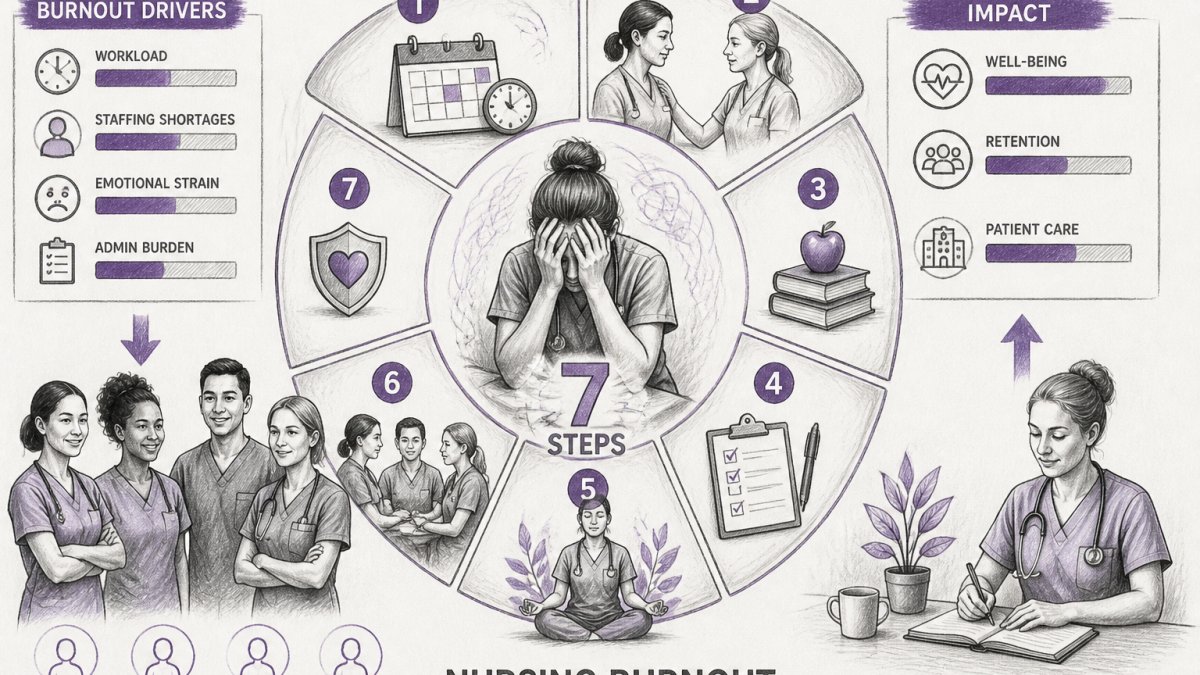
How to Reduce Nursing Burnout in Facilities: 7 Steps
Table of Contents
- What Nursing Burnout Costs Your Facility
- Nurse Burnout Warning Signs to Watch For
- Step 1: Use Nurse Burnout Assessment Tools to Measure the Problem
- Step 2: Fix Workload, Patient-to-Nurse Ratios, and Documentation Burden
- Step 3: Build Leadership Support and Psychological Safety on Every Unit
- Step 4: Apply Nurse Retention Strategies That Address Root Causes
- Step 5: Rethink Nurse Staffing Strategies for Long-Term Coverage
- Step 6: Support Recovery With Wellness Programs and Self-Care That Stick
- Step 7: Track Progress and Adjust Every Quarter
- Frequently Asked Questions
Last Updated: October 15, 2026
What Nursing Burnout Costs Your Facility
Nursing burnout is a state of physical and emotional exhaustion caused by prolonged workplace stress.
At Major Staffing, we place nurses and aides in facilities. We see what burnout does up close. It drains your team, your budget, and your residents' care.
The warning signs rarely appear overnight. They build slowly, and most facilities miss them until staff start quitting.
The Three Dimensions of Burnout
Researchers describe burnout through three dimensions:
- Emotional exhaustion: feeling drained before the shift even starts
- Depersonalization: going through the motions, losing patience with patients
- Reduced personal accomplishment: feeling like your work no longer matters
When all three show up together, a good nurse starts looking for the door.
Nurse Burnout Warning Signs to Watch For
Nurse burnout warning signs fall into two groups: early signals and late-stage signs. Catching the early ones gives you time to act.
Early signals include irritability, calling out more often, and pulling back from team huddles. Late-stage signs are harder to reverse: open resentment, chronic absenteeism, and resignation letters.
Early Signals vs. Late-Stage Signs
| Stage | Signals | What It Means |
|---|---|---|
| Early | Irritability, quiet withdrawal, more sick days | Stress is building |
| Mid | Missed documentation, snapped responses, overtime refusal | Coping is breaking down |
| Late | Resignations, open conflict, errors in care | Burnout is fully set in |
Step 1: Use Nurse Burnout Assessment Tools to Measure the Problem
You cannot fix what you have not measured. Nurse burnout assessment tools turn vague complaints into data you can act on, and they give you a baseline to compare against three, six, and twelve months from now.
Start with a validated instrument rather than a homemade survey. The Maslach Burnout Inventory (MBI) is the most widely used measure and scores the three dimensions of burnout: emotional exhaustion, depersonalization, and personal accomplishment (Comparing the Maslach Burnout Inventory to Other Well-Being Instruments in Emergency...).
Pick one instrument, use it consistently, and do not switch mid-stream. Changing tools between cycles makes trend lines meaningless.
Build a Baseline Before You Change Anything
A baseline is the number you compare everything else to. Without it, you cannot tell whether an intervention worked or whether the unit simply had a good month.
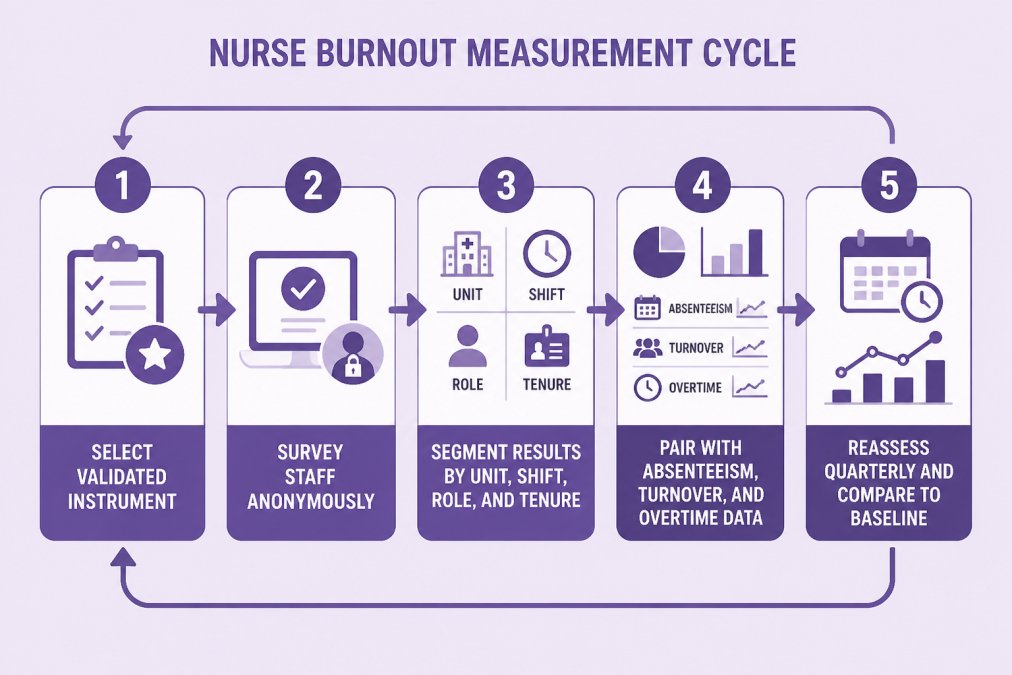
A practical baseline cycle looks like this:
- Select the instrument. Choose MBI, CBI, or ProQOL based on length, licensing, and what you want to learn.
- Survey anonymously. Use a paper drop box or a survey tool that does not capture names or IP addresses. Anonymity is the difference between honest answers and polite ones.
- Segment the results. Break scores out by unit, shift, role (CNA, CMA, LPN, RN), and tenure. A facility-wide average hides the unit that is actually burning.
- Pair scores with operational data. Pull absenteeism, voluntary turnover, open shifts, and overtime hours for the same period. Burnout scores that rise while turnover rises tell a clearer story than either metric alone.
- Reassess on a fixed cadence. Quarterly works for most facilities. Annual is too slow to catch a unit sliding, and monthly invites survey fatigue.
What to Track Alongside Burnout Scores
Burnout scores alone are a snapshot. The operational metrics are what tell you whether the snapshot is improving.
- Voluntary turnover by unit, not facility-wide. A single unit can be bleeding while the building average looks fine.
- Absenteeism and call-out patterns, repeated call-outs from the same shift usually point to a system issue, not a weak employee.
- Open shifts and overtime hours, rising overtime on a unit with rising exhaustion scores is a compounding problem.
Close the Loop With Staff
Measurement without follow-up is worse than no measurement at all. It teaches staff that speaking up changes nothing.
After each cycle, report back three things: what the scores showed, what you are changing first, and when you will reassess. Keep the report short and specific.
If a unit's scores do not move after two cycles, that is data too. It usually means the intervention targeted the wrong cause, or the cause sits above the unit level.
Step 2: Fix Workload, Patient-to-Nurse Ratios, and Documentation Burden
Workload sits at the center of most burnout. Patient-to-nurse ratios, charting time, and constant interruptions all pile onto the same shift.
A few changes make a real difference:
- Cap consecutive shifts to protect recovery time
- Trim duplicate documentation fields
- Add a float pool or PRN coverage for peak days
Staffing Levels and Scheduling That Protect Recovery Time
Scheduling is where good intentions meet reality. Build in recovery time instead of hoping staff find it.
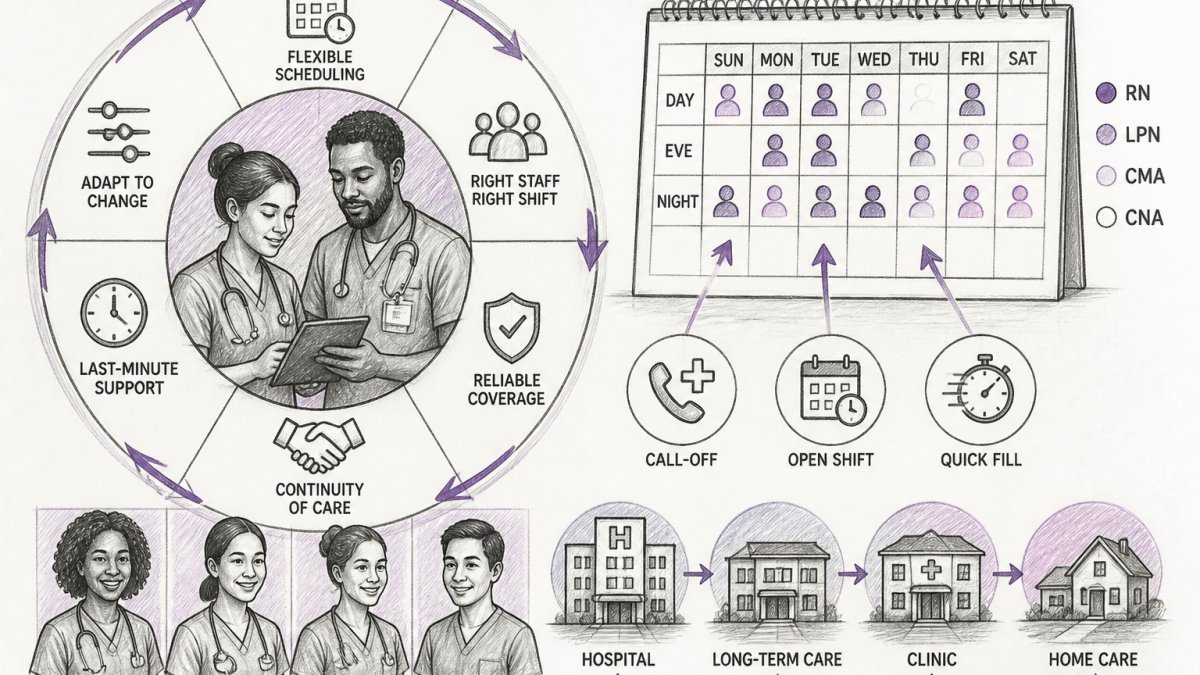
Rotate hard assignments fairly. Give notice on schedule changes. When a unit is short, bring in outside coverage early rather than stretching your core team again.
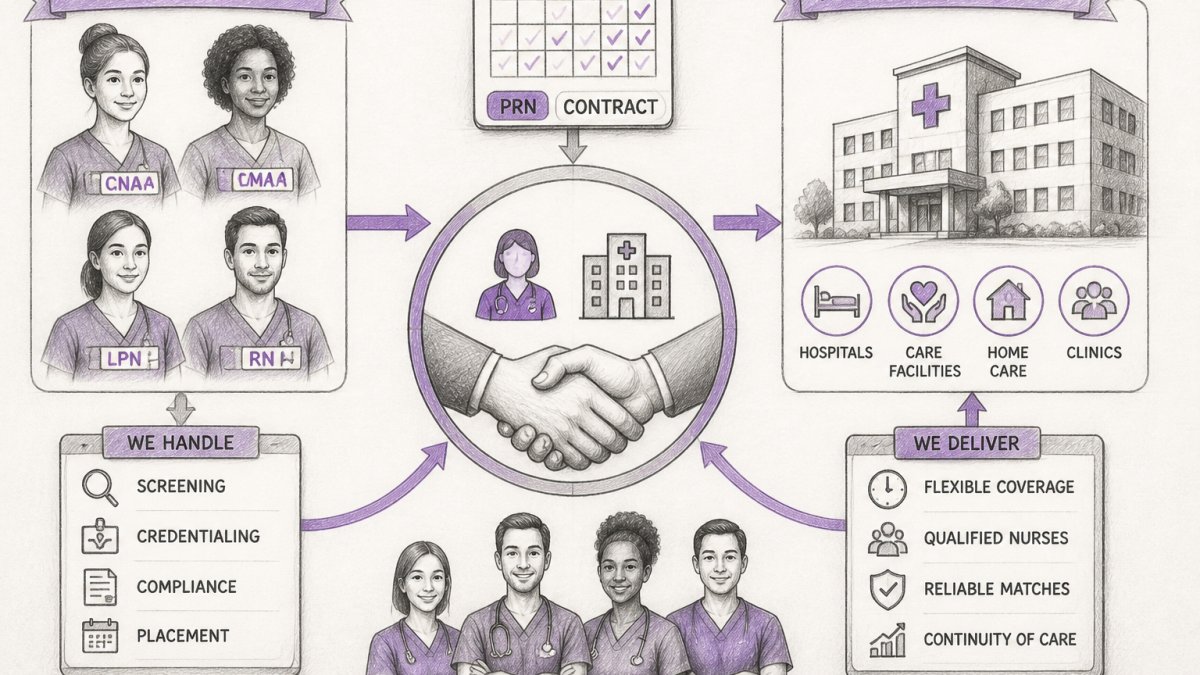
That is where a staffing partner helps. Major Staffing provides reliable staffing solutions ranging from last-minute shift coverage to long-term placements, ensuring facilities receive compassionate care while offering nurses and aides flexible, meaningful work opportunities.
Step 3: Build Leadership Support and Psychological Safety on Every Unit
Leadership support is the strongest lever you have. Nurses stay where they feel heard, respected, and safe to speak up.
What that looks like in practice:
- Managers round on units during real shift hours
- Staff can raise concerns without fear of backlash
- Recognition is specific and timely
Psychological safety is not a slogan. It is whether a CNA feels safe telling a manager the assignment is unsafe.
Step 4: Apply Nurse Retention Strategies That Address Root Causes
Nurse retention strategies only work when they target the actual cause. Free pizza does nothing if the problem is a 1:12 ratio.
Match the fix to the problem:
- Exhaustion → adjust ratios and scheduling
- Feeling unseen → real recognition and career paths
- Unsafe staffing → reliable coverage options
Track turnover by unit and exit-interview themes. If the same complaint keeps appearing, you have found your root cause.
Step 5: Rethink Nurse Staffing Strategies for Long-Term Coverage
Strong nurse staffing strategies keep a facility covered without burning out the core team. That means a deliberate mix of full-time staff, PRN help, and contract coverage, planned before the shortfall hits rather than after.
Most facilities react to a call-out by stretching the people already on the floor. That works once. Do it every week and you are borrowing against the same nurses who are already showing early burnout signals.
Build the Bench Before You Need It
A bench is the list of people you can call when a shift opens. Facilities that keep one filled tend to absorb shortfalls without overtime spikes; facilities that do not end up scrambling.
A practical bench-building sequence:
- Map your coverage gaps. Look at the last 90 days of open shifts by unit, day, and role. Patterns show up fast.
- Identify the roles you cannot cover internally. CNAs and CMAs are often the hardest to backfill on short notice. LPNs and RNs may need a different mix depending on the unit.
- Set up a PRN pool for predictable gaps. PRN works best for recurring needs: weekend coverage, vacation backfill, and seasonal census changes.
- Reserve contract coverage for extended gaps. Contract assignments fit leave coverage, vacancies that take weeks to fill, and rural units with a thin local bench.
- Keep onboarding simple. A new face who cannot get on the floor for two weeks does not solve a shortfall this week.
Availability always depends on current facility needs. We tell facilities that up front so no one is caught off guard.
How Different Facility Types Need Different Plans
A rural hospital and an assisted living community face very different pressures, and the coverage plan should reflect that.
| Facility Type | Main Pressure | Coverage Approach |
|---|---|---|
| Long-term care | Daily CNA and LPN coverage, high census swings | Steady PRN pool with a small contract backup |
| Assisted living | Consistency for residents, familiar faces | Same PRN staff where possible, minimal rotation |
| Rural hospital | Wide skill mix, thin local bench | Contract and PRN mix, planned further ahead |
How the Plan Changes by Role
CNAs and CMAs carry the heaviest direct-care load and are often the first to feel a short-staffed shift. Protecting their coverage protects the whole unit.
LPNs and RNs carry assessment, documentation, and delegation duties on top of direct care. When their coverage thins, charting backs up and the next shift inherits the backlog.
A plan that only backfills RN shifts while leaving CNA coverage short will still burn out the unit.
What Good Coverage Protects
Coverage is not just a scheduling exercise. It is what makes the rest of the burnout work possible.
- Recovery time, nurses who get their days off actually recover, which is the point of scheduling.
- Retention, a unit that is not constantly stretched keeps its experienced staff longer.
- Resident dignity, consistent, unhurried care is what residents notice, and it depends on adequate coverage.
That is where a staffing partner helps. Major Staffing fills PRN and contract shifts so your nurses get their days off back, and so the people on the floor can focus on the care in front of them.
Step 6: Support Recovery With Wellness Programs and Self-Care That Stick
Wellness programs fail when they add one more thing to a tired nurse's day. The ones that stick fit into the shift, not around it.
What helps:
- Real breaks that are actually covered
- Quiet spaces to reset
- Sleep, movement, and food basics made easy
Self-care matters, but it cannot outrun a broken schedule. Fix the workload first, then support recovery.
Step 7: Track Progress and Adjust Every Quarter
Burnout work is never finished. Review your survey data, turnover numbers, and staff feedback each quarter.
Ask three questions:
- Are the warning signs easing on the hardest units?
- Are staff using the support we built?
- What changed since last quarter?
Adjust and repeat. Small, steady changes beat one big overhaul.
Frequently Asked Questions
What are the most common nurse burnout warning signs?
Watch for emotional exhaustion, cynicism or depersonalization toward patients, and a drop in perceived accomplishment. Practical signals include increased callouts, late documentation, withdrawal from team communication, and reduced participation in meetings. Physical signs like fatigue, headaches, and sleep problems often appear alongside the emotional ones. Catching these early gives you more options for support, before a nurse reaches the point of quitting or making a care error.
What are some ways to reduce nursing burnout?
Start by measuring it with a validated assessment tool, then act on what the data shows. Common fixes include adjusting staffing levels and patient-to-nurse ratios, reducing documentation burden, offering flexible scheduling, training managers in supportive leadership, and giving nurses a real voice in decisions that affect their unit. Pair those with wellness supports like emotional check-ins and access to mental health resources. Organizational changes matter more than individual self-care alone.
How can healthcare facilities improve nurse retention?
Retention improves when nurses feel heard, supported, and fairly scheduled. Build participatory programs where staff help shape workflow and scheduling decisions. Track turnover and exit interview themes to find patterns. Recognize good work consistently, not just during Nurses Week. Provide clear paths for growth. Facilities that address workload and leadership support directly tend to keep nurses longer than those that rely only on perks or one-time bonuses.
Which nurses are most prone to burnout?
Burnout risk varies by role and setting. Nurses working in high-acuity units, night shifts, or understaffed units often report higher emotional exhaustion. Newer nurses adjusting to the pace and responsibility can be vulnerable, and so can experienced nurses carrying heavy preceptor or administrative loads. Direct-care roles with high patient-to-nurse ratios and limited scheduling control tend to show the strongest warning signs. Assessment data by unit and role will show you where your facility's risk is concentrated.
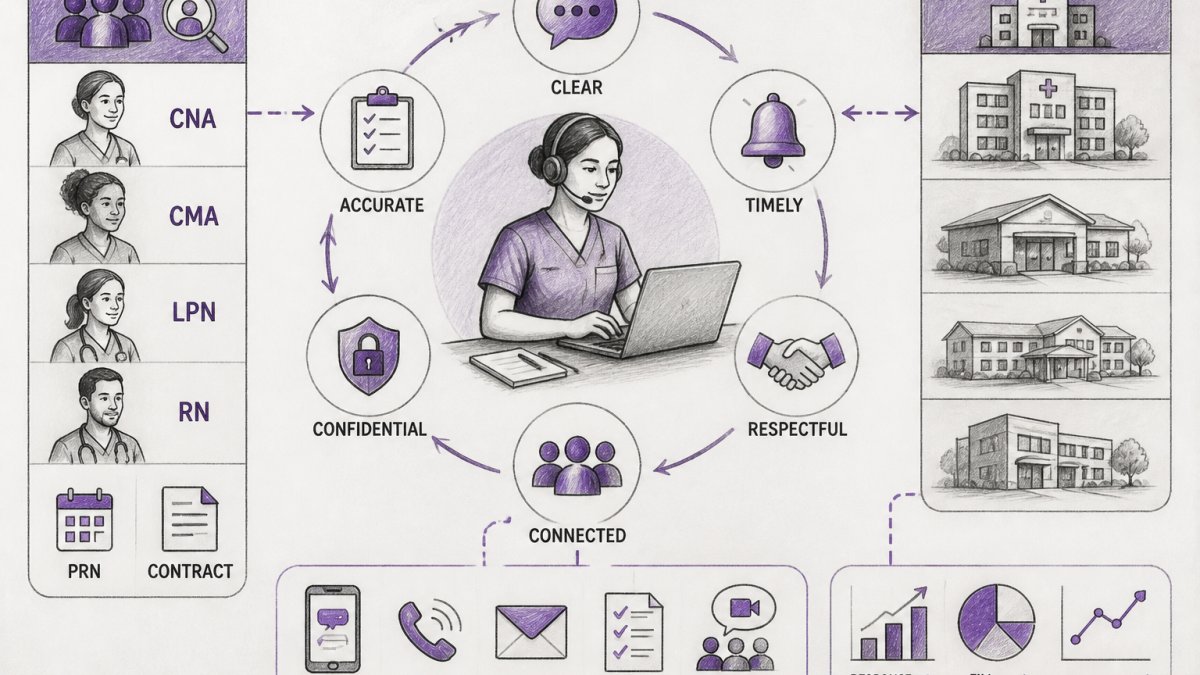
Nursing burnout will not fix itself, and no single program solves it. It takes honest measurement, real workload changes, and leaders who listen. At Major Staffing, we are a nurse-led agency built on dependable coverage, flexible work for nurses and aides, and a partnership approach that treats your team like people, not account numbers. Whether you need last-minute shift coverage or long-term placements, get started with Major Staffing and give your staff the support they deserve.