 how-to
Nursing Agency Communication Best Practices for 2026
Table of Contents
- Why Nursing Agency Communication Breaks Down
- Build a Healthcare Staffing Request Checklist Before You Call
- Nurse Staffing Communication Templates That Save Time
- Make the Nursing Agency Onboarding Process a Two-Way Handoff
- Communication Across Shifts, Facilities, and Assignment Changes
- Escalation Pathways and After-Hours Support
- Run a Healthcare Staffing Feedback Process That Changes Behavior
- Frequently Asked Questions
Last Updated: October 21, 2026
Why Nursing Agency Communication Breaks Down
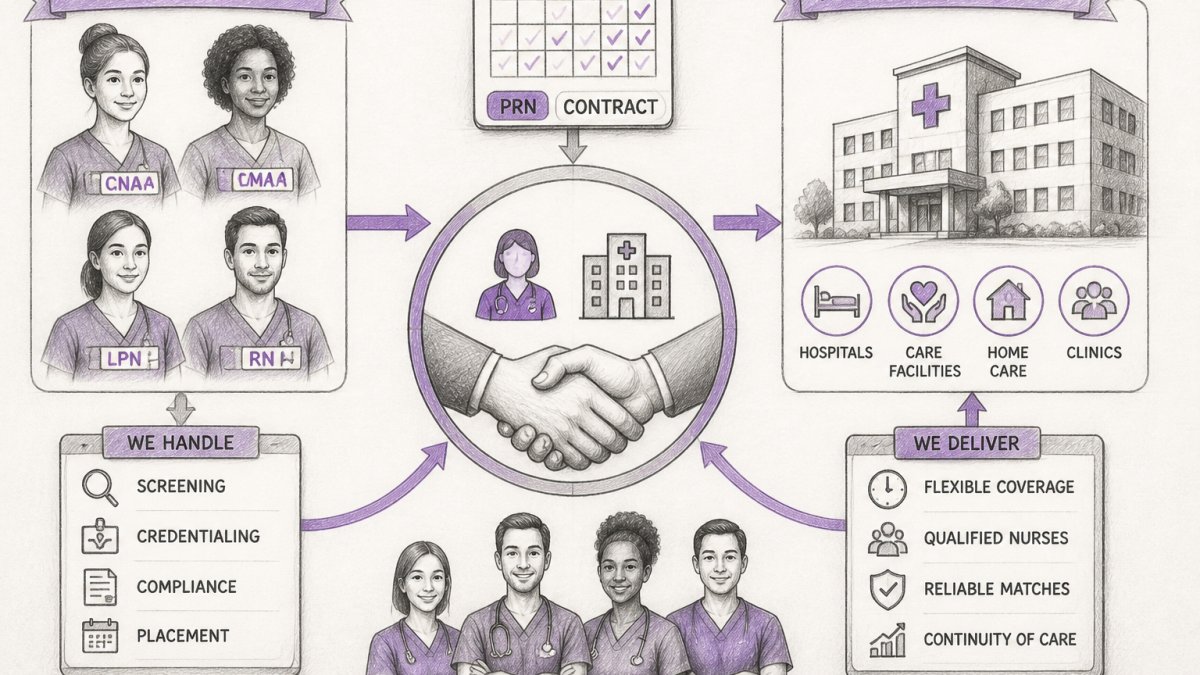
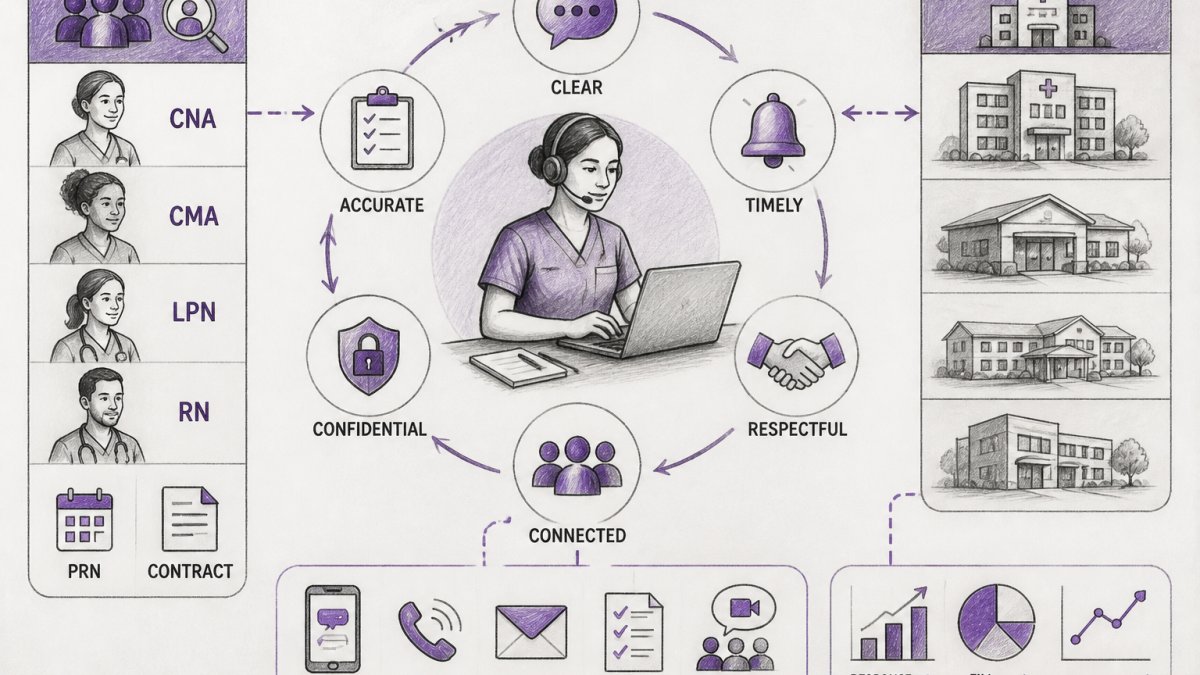
Most shift problems don't start on the floor. They start in a message that never got sent, a detail that got dropped, or a call that came too late. Strong nursing agency communication is the difference between a nurse who walks in ready and a nurse who walks in guessing.
At Major Staffing, we hear the same story from facilities and clinicians alike: the clinical skills were there, but the handoff wasn't. A missing note about a resident's diet. A shift time that changed without a heads-up. A coordinator who couldn't be reached at 6 a.m.
The Gaps That Cause Most Shift Problems
Three gaps show up again and again:
- Incomplete requests. The facility asks for a CNA but leaves out the unit, the shift length, or the level of care.
- Unclear expectations. The nurse never learns the facility's charting system or who to report to.
- Silent escalation. A problem comes up and nobody knows who to call.
Each gap is fixable. None of them require new software or a bigger budget. They require a shared habit of saying the full picture, every time.
Build a Healthcare Staffing Request Checklist Before You Call
A healthcare staffing request checklist turns a rushed phone call into a clean handoff. The facility gets the right person faster, and the nurse arrives knowing what to expect. The difference between a request that fills smoothly and one that bounces back and forth usually comes down to whether the intake was complete on the first pass.
Before you pick up the phone, have these facts ready. It takes two minutes and saves hours of back-and-forth.
What Belongs on the Checklist
- Role needed: CNA, CMA, LPN, or RN
- Unit or setting: long-term care, assisted living, or rural hospital
- Shift date, start time, and length
- Level of care and any special needs
- Charting system the nurse will use
- Who to report to on arrival
- Facility contact for the day of the shift
- Any orientation or badge steps required
- Whether the assignment is PRN or contract, and the expected duration
- Any unit-specific protocols the nurse should review before arrival
Why Each Item Earns Its Place
A checklist only works when the person filling it out understands what each line prevents. Role and setting drive the match, a CNA request for a rural hospital unit is a different search than a CNA request for assisted living. Shift date, start time, and length determine whether a clinician's availability actually fits. Charting system and reporting contact are the two items nurses most often say they wish they'd known before walking in. Orientation and badge steps are the quiet killers: a nurse who can't get past the front desk loses the first hour of the shift.
Run the Request as a Confirmation Loop
A checklist is only half the job. The other half is reading it back. After the facility gives the details, the coordinator repeats them in a short summary, role, setting, date, time, charting system, reporting contact, and asks the facility to confirm or correct. This is the same closed-loop habit nurses use on the floor, applied to intake. It catches the mismatches before a nurse is dispatched.
A common pattern is a facility that says "CNA, night shift" and assumes the rest is obvious. The confirmation loop surfaces the missing pieces: which unit, which building, which supervisor, which charting platform. Facilities that use a checklist and a read-back report fewer callbacks and fewer surprises.
Match Against Current Needs, Not Assumptions
Availability depends on what facilities need at the time, so the more detail you share, the faster a match happens. A complete request lets the coordinator check it against current openings and clinician availability in one pass instead of three. When a request is vague, the coordinator has to guess, and guessing is where mismatches start.
Nurse Staffing Communication Templates That Save Time
Templates cut the blank-page problem. They give coordinators and nurses a starting point so nothing important gets left out.
Shift confirmation (agency to nurse):
Hi [Name], confirming your [role] shift at [facility] on [date] from [start] to [end]. Report to [contact] on [unit].
Arrival check-in (nurse to coordinator):
Arrived at [facility] at [time]. Met [contact]. Starting [unit] now. Will flag anything unusual.
End-of-shift note (nurse to coordinator):
Shift complete at [facility]. [One line on how it went]. Any issues: [none / details]. Available for [dates] if needed.
These templates keep messages short and clear. They also build a record you can look back on when a facility asks what happened.
Make the Nursing Agency Onboarding Process a Two-Way Handoff
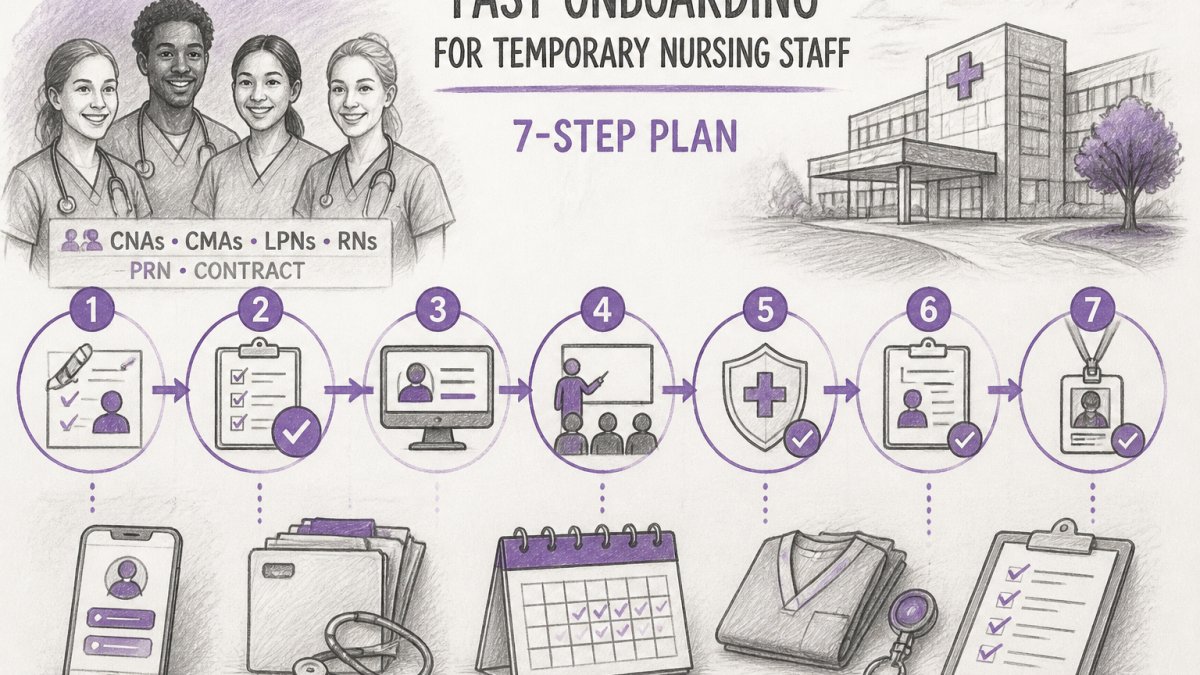
Onboarding shouldn't be a one-way information dump. The nursing agency onboarding process works best when both sides trade information and confirm they understand it.
From the facility, the agency needs the practical details: unit layout, charting system, break policy, and who to call.
Then both sides confirm. A short "here's what I heard" reply catches misunderstandings before the shift. This is the same closed-loop habit nurses already use on the floor, applied to scheduling.
When onboarding is a real handoff, the first shift feels less like a test and more like a normal day.
Communication Across Shifts, Facilities, and Assignment Changes
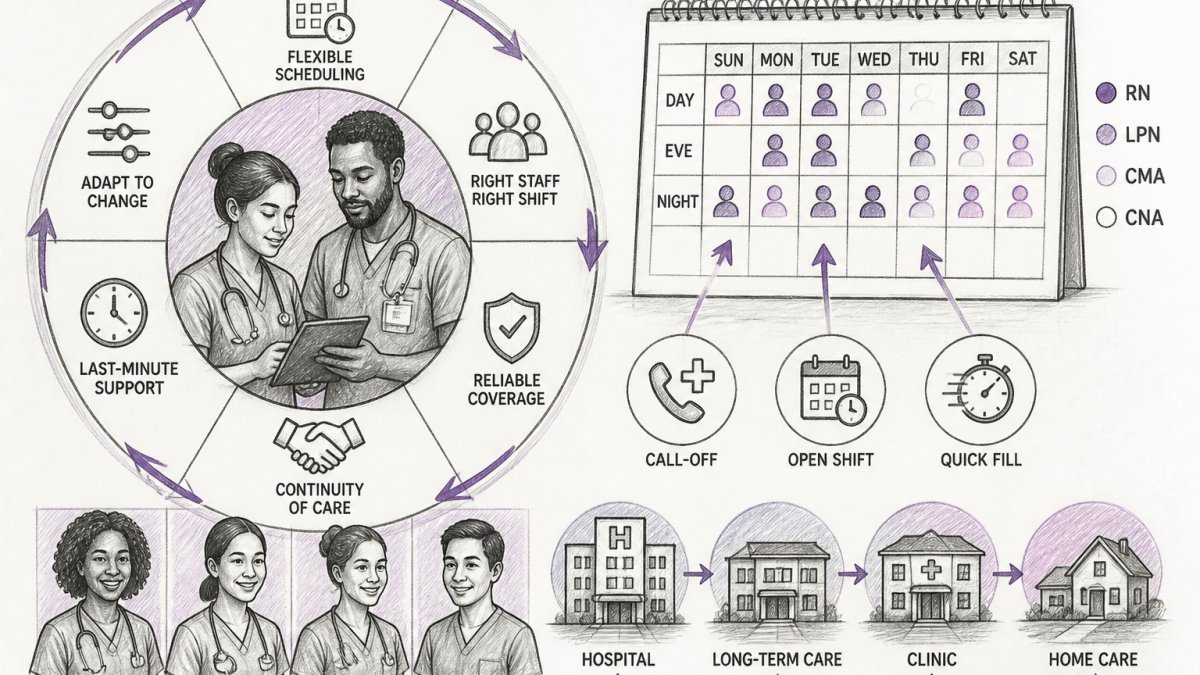
Agency nurses move between facilities, so handoffs matter more, not less. A nurse covering a new building needs the same clear picture a staff nurse gets at shift change.
Use a simple structure for every handoff. Many teams borrow SBAR (Situation, Background, Assessment, Recommendation) or I-PASS for shift reports. The point is consistency: same order, same details, every time.
- Situation: who the patient or resident is and what's happening
- Background: relevant history and current plan
- Assessment: what you observed
- Recommendation: what the next person should watch or do
When an assignment changes mid-week, send a quick update. A one-line message about a new unit or a different start time prevents a wasted trip and a frustrated nurse.
Escalation Pathways and After-Hours Support
Every agency shift needs a clear escalation path. A nurse who hits a problem at 2 a.m. should know exactly who to call, in what order, and when to escalate. Most general nursing communication guides stop at "communicate clearly" and never draw the path.
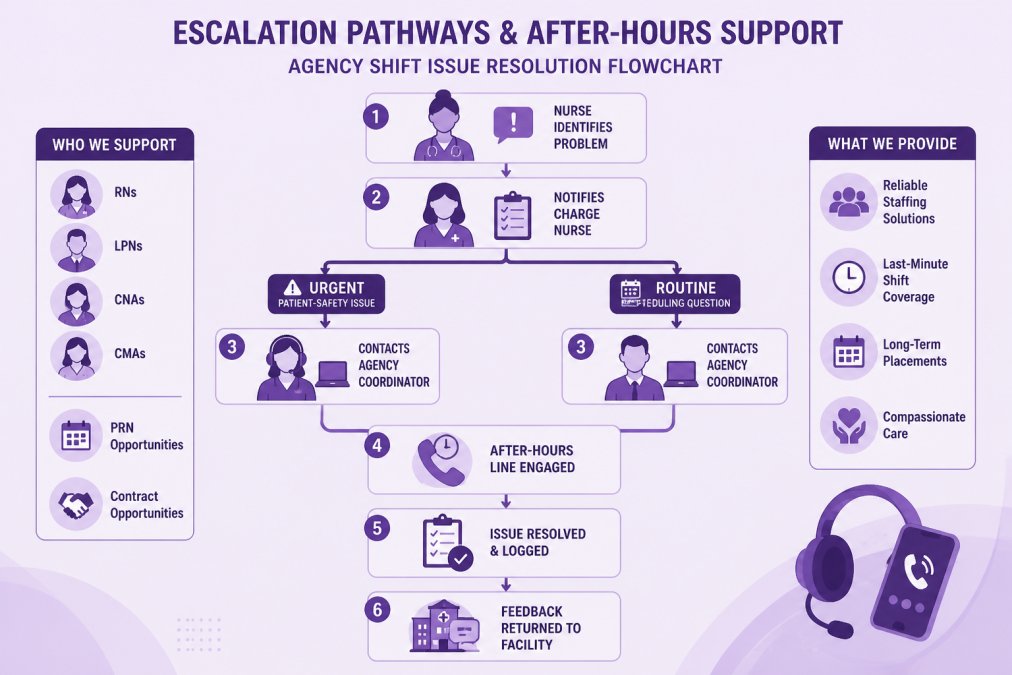
Draw the Decision Branches
The path splits by the type of problem, not by who is easiest to reach.
- Patient-safety concern. Follow the facility's own protocol first, charge nurse, then house supervisor, then the facility's on-call chain. Loop in the agency coordinator once the immediate safety step is underway. The facility owns the clinical response; the agency owns the follow-up.
- Scheduling, time, or assignment question. Contact the agency coordinator during business hours. After hours, use the agency's after-hours line. These are not emergencies and should not go to the charge nurse.
- Conduct or fit concern on the unit. Report to the agency coordinator, who routes it to the facility manager. Keep the report factual: what happened, when, who was involved, what was done.
- Facility-side issue the nurse can't resolve. Escalate to the agency coordinator, who contacts the facility's designated manager. The nurse should not be the one negotiating between facility departments.
Name the After-Hours Owner and a Backup
An after-hours line without a named owner is a voicemail box. Before the first shift, the agency should tell the nurse who answers the after-hours line, what response time to expect, and who the backup is if the first contact doesn't answer. A nurse shouldn't have to guess who to call when things go wrong, and a nurse shouldn't have to call three numbers to find a human.
Log Every Escalation
Every escalation should leave a record: time raised, who was contacted, what was decided, and when it was resolved. The log does two things. It gives the agency a factual account if a facility later asks what happened. And it shows patterns, the same unit, the same time of night, the same missing information, that point to a fix upstream.
Close the Loop Back to the Nurse
An escalation isn't finished when the issue is resolved. The nurse who raised it should hear back: what was done, what changed, and whether anything is expected on the next shift. Closing the loop is what turns an escalation path into a trust-building habit rather than a complaint channel.
Run a Healthcare Staffing Feedback Process That Changes Behavior
A healthcare staffing feedback process only works if it actually changes something. Collecting comments and filing them away helps no one.
Close the loop. When a facility flags a late arrival or a missed note, tell the nurse what happened and what to do differently. When a nurse says a unit was short on supplies or unclear on protocol, tell the facility. Then check back to confirm the fix stuck.
Keep it simple:
- Ask for one specific thing that went well and one that didn't
- Share the feedback with the right person within a day or two
- Follow up on the next shift to confirm the change
Reliable professionals want to do good work. Clear, kind feedback helps them do it. That same honesty is what keeps facilities coming back.
Frequently Asked Questions
How should healthcare facilities communicate staffing needs to a nursing agency?
Send one request with the essentials in writing: facility name, unit, shift date and hours, license type needed, certifications required, and any unit-specific rules such as charting system or badge process. Note the deadline for confirmation and a backup contact. A written request beats a phone call because both sides have the same record. Follow up by phone only if you have not received confirmation by your stated deadline, and keep the request format identical every time so nothing gets missed.
How can nursing agencies and healthcare facilities prevent shift communication errors?
Use closed-loop communication: the facility sends the request, the agency repeats it back, and the facility confirms. At the start of each shift, the arriving nurse reads back the assignment, resident or patient concerns, and any precautions to the charge nurse. Write down anything verbal in the shift report. Errors usually start with assumptions about who was told what, so name one contact on each side and route changes through them instead of side conversations.
What should a nurse do if shift instructions are unclear?
Ask before you start, not halfway through the shift. Confirm the assignment, break coverage, and who to call for what. If the charge nurse is busy, ask for a two-minute huddle and read back what you understood so they can correct it. If something changes mid-shift, get the update from the person authorized to give it and document it in the shift notes. When in doubt, contact your agency coordinator, who can help clarify expectations with the facility.
How often should a facility check in with its staffing agency?
Set a rhythm instead of waiting for problems. A short check-in after each placement's first shift catches orientation issues early, a weekly or biweekly review covers fill rates and upcoming needs, and a longer review each quarter looks at reliability, documentation quality, and feedback trends. Keep the check-ins brief and bring specifics: dates, shifts, and what went well or wrong. Predictable contact makes it easier for both sides to raise small issues before they become cancellations.
Communication is the part of staffing that no one sees until it fails. If your facility is tired of chasing callbacks and guessing who's coming, Major Staffing can help. We're a nurse-led agency built on partnership, flexible placements, and clear, supportive communication from the first call to the last shift. Get started with Major Staffing and build a staffing rhythm you can count on.