 how-to
Flexible Nursing Shift Staffing Solutions That Work
Last Updated: October 23, 2026
Quick Summary
Flexible nursing shift staffing solutions let facilities fill open shifts with qualified nurses without locking anyone into a rigid, weeks-ahead schedule. Shifts are posted, claimed, and confirmed through a clear process, so facilities know the shift is covered and nurses choose what fits their life.
- Facilities that plan for flexibility from the start spend far less time firefighting schedule gaps.
- PRN nursing shifts are on-call, as-needed assignments a nurse accepts shift by shift.
- Last-minute coverage works when the process is in place before the callout happens.
- Ask who answers at 6 a.m. and how fast a shift can be confirmed in writing.
- Chasing the lowest rate costs more than a reliable fill that honors the commitment.
Table of Contents
- Why Flexible Nursing Shift Staffing Solutions Matter Now
- How Flexible Nurse Scheduling Gives Staff and Facilities Control
- PRN Nursing Shifts: Where They Fit and Who They Suit
- Last-Minute Nursing Shift Coverage Without the Chaos
- Nurse Staffing Strategies That Hold Up Over Time
- How to Evaluate and Choose a Staffing Partner
- Common Pitfalls and How to Avoid Them
- Conclusion
- Frequently Asked Questions
Why Flexible Nursing Shift Staffing Solutions Matter Now
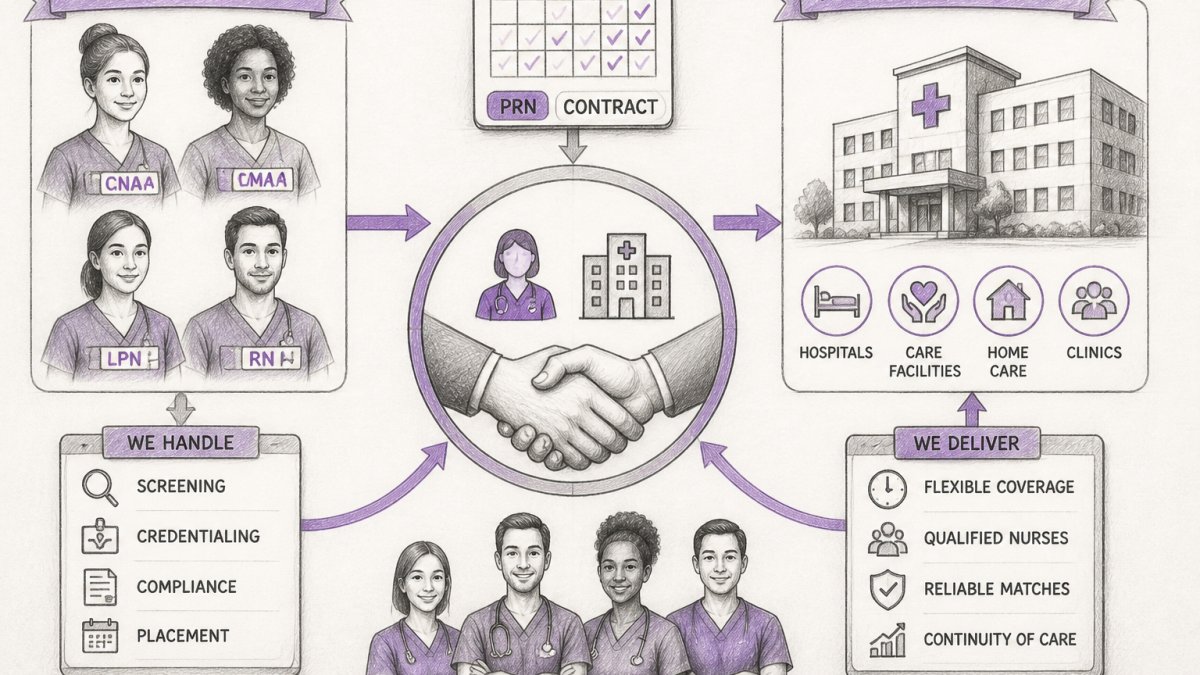
Flexible nursing shift staffing solutions are the systems that let a facility fill open shifts with qualified nurses without locking everyone into a rigid, weeks-ahead schedule. They matter because callouts, census swings, and sudden admissions do not wait for a perfect plan.
Ask any nurse manager what the hardest part of the week is, and you rarely hear "patient care." You hear "the schedule." Someone calls out two hours before a shift. A unit needs one more aide by 7 a.m. A rural hospital has three nurses and a full house.
That is the gap this work lives in. At Major Staffing, we are a nurse-led agency, and we built our approach around one plain fact: a schedule that bends is a schedule that holds.
Here is what most guides get wrong. They treat flexible staffing as a last resort, something you reach for when things fall apart. In practice, facilities that plan for flexibility from the start spend far less time firefighting. They know who to call. They know the process. Nobody panics.
Below, we break down how flexible scheduling works, where PRN shifts fit, and how to pick a staffing partner you can actually count on.
How Flexible Nurse Scheduling Gives Staff and Facilities Control
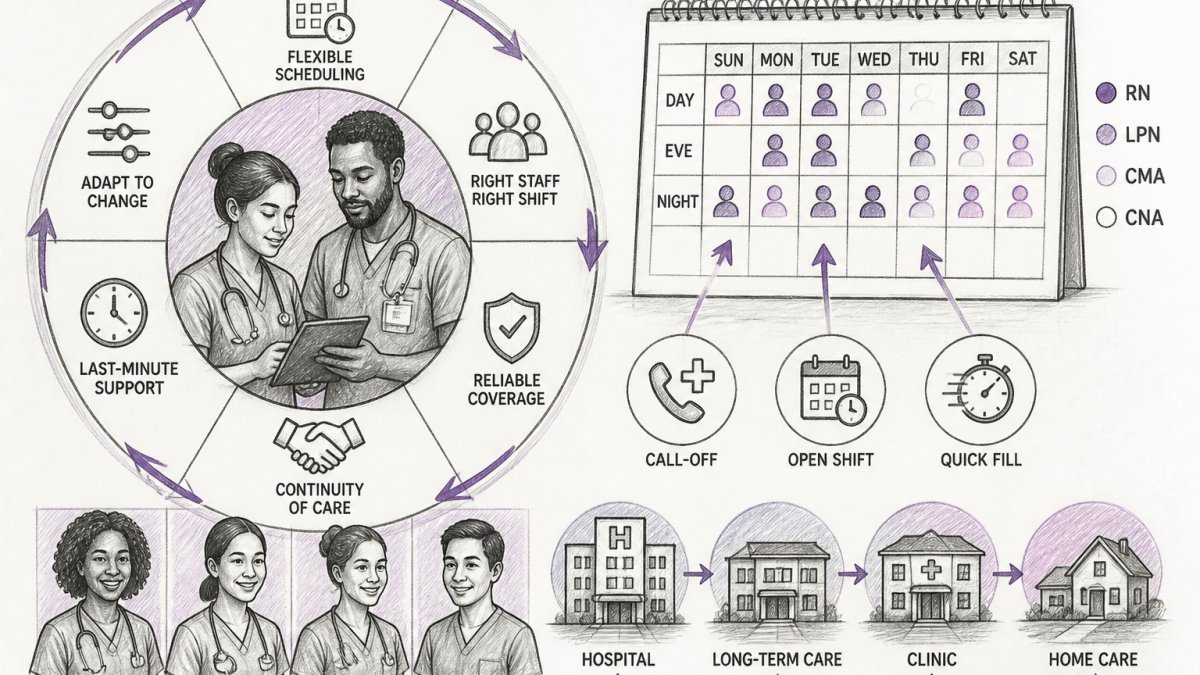
Flexible nurse scheduling is a system where shifts are posted, claimed, and confirmed through a clear process instead of being fixed months in advance. Both sides get a say: the facility sets its needs, and the nurse chooses what fits their life.
The cycle is simple:
- Facility posts an open shift with the date, unit, and requirements
- A qualified nurse reviews and claims the shift
- The agency confirms the match with both sides
- The nurse works the shift
- Feedback gets logged so the next match is better
That last step is the one most people skip. It is also the one that separates a real partnership from a phone tree.
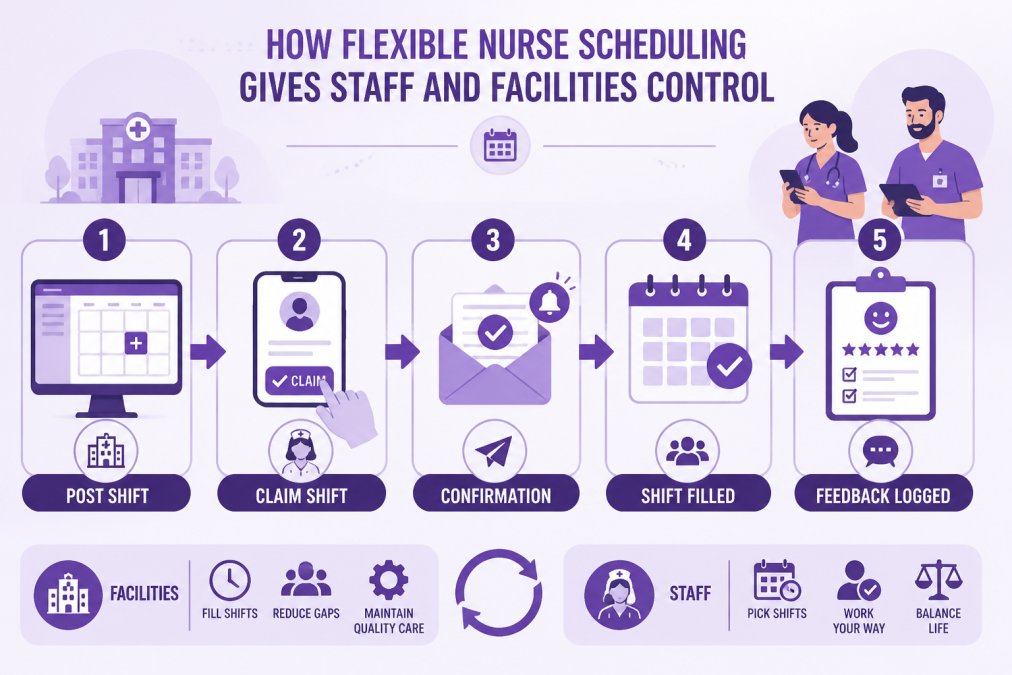
For nurses, control means choosing when you work. Want weekends only? Say so. Need a lighter month? You are not begging for it. For facilities, control means knowing the shift is covered by someone who confirmed it, not someone who might show up.
PRN Nursing Shifts: Where They Fit and Who They Suit
PRN nursing shifts are on-call, as-needed assignments that a nurse accepts shift by shift rather than on a fixed weekly schedule. PRN work suits nurses who want flexibility, and it suits facilities that need to cover gaps without adding permanent headcount.
Who does PRN fit best?
- Nurses who want to pick their own days and keep another commitment
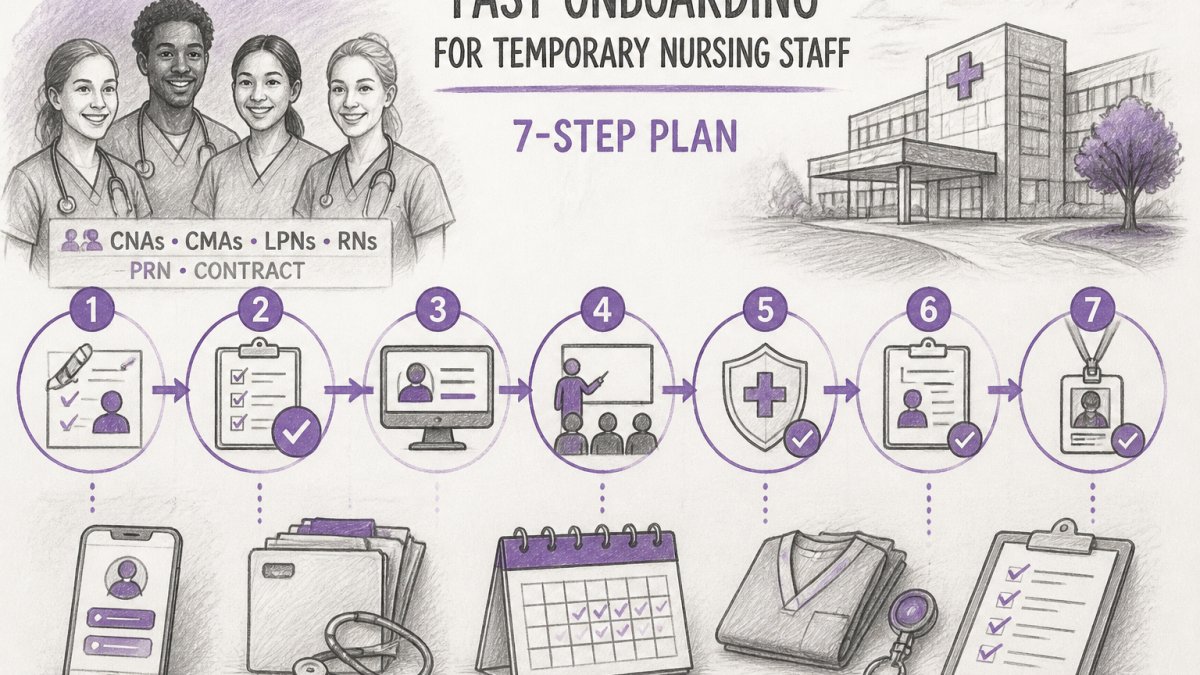
- CNAs and CMAs building experience across different care settings
- LPNs and RNs who want variety without a long contract
- Facilities covering vacations, leave, or sudden census changes
PRN is not a fit for everyone. If you want the same unit, same team, same hours every week, a contract role is a better match. But for nurses who value control over their calendar, PRN is often the reason they stay in the field.
Availability varies by facility need. We do not promise a set number of shifts, because the honest answer depends on what facilities are asking for that week. What we can promise is a straight answer about what is open right now.
Last-Minute Nursing Shift Coverage Without the Chaos
Last-minute nursing shift coverage works when the process is already in place before the callout happens. The worst time to build a plan is 6 a.m. with a shift starting at 7.
Here is what a calm process looks like:
- The facility sends one clear request: unit, time, and credentials needed
- The agency checks its pool of nurses who have confirmed availability
- The closest qualified match gets a direct offer
- Confirmation goes back to the facility, in writing
- The nurse arrives knowing the unit and the expectations
The chaos comes from ambiguity. Vague requests, unclear credentials, and no confirmation trail turn a fillable shift into a scramble.
Nurse Staffing Strategies That Hold Up Over Time
Nurse staffing strategies that last are built on reliability, not volume. Anyone can send a name. The hard part is sending someone who shows up, communicates, and honors the commitment.
Three things make a strategy hold:
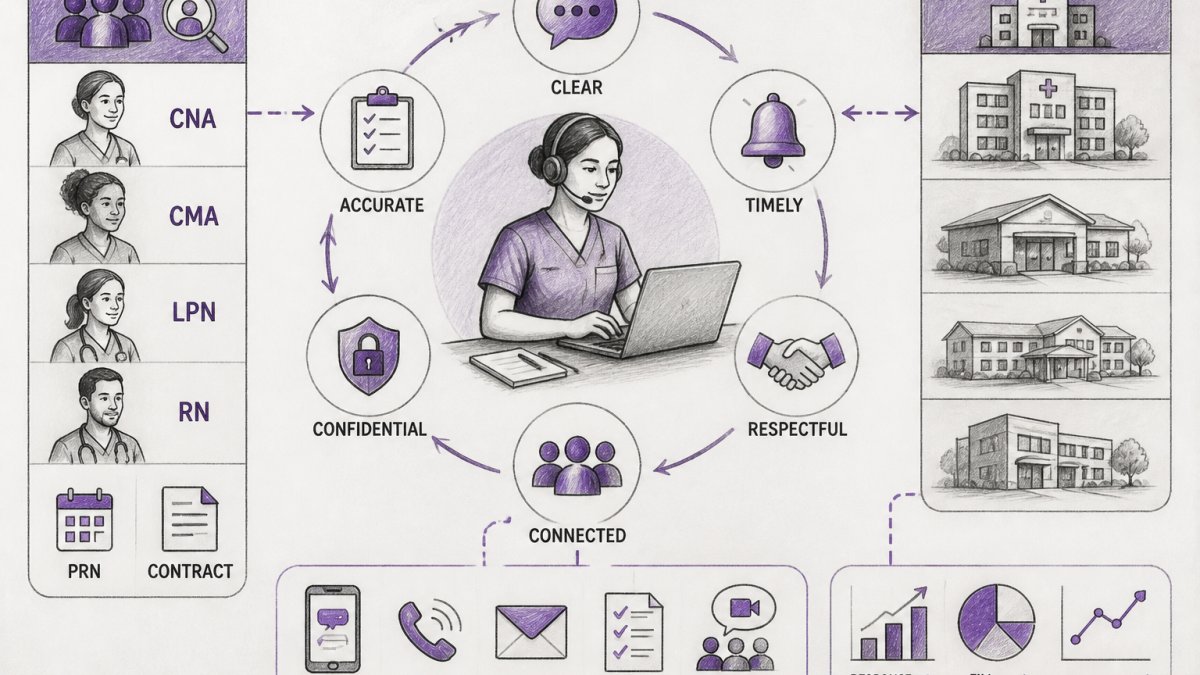
Honest communication. If a shift cannot be filled, say so fast. A facility can plan around a no. It cannot plan around silence.
Consistent people. Nurses who know the facility, the charting system, and the residents settle in faster and need less hand-holding.
Clear expectations on both sides. Nurses should know the unit and the requirements before they accept. Facilities should know exactly who is arriving.
We look for nurses who treat a shift commitment like a promise. That is the whole bar. Skills can be verified. Reliability is a choice, and it is the one we screen for hardest.
How to Evaluate and Choose a Staffing Partner
Choosing a staffing partner comes down to five questions you should ask before you sign anything. The answers tell you more than any brochure.
| What to Ask | Why It Matters | What a Good Answer Sounds Like |
|---|---|---|
| Who answers when I call at 6 a.m.? | Coverage fails when nobody picks up | A named contact with a direct line |
| How fast can you confirm a shift? | Speed decides whether the gap gets filled | A clear process with a written confirmation |
| How do you vet reliability? | One no-show costs more than being short | Specific screening and feedback steps |
| Do you handle long-term placements too? | You want one partner, not three | A real answer on both PRN and contract |
| How much back-and-forth will this take? | Your HR team is already stretched | A simple, low-friction process |
Ask for specifics. "We have a great pool" means nothing. "Here is how we confirm, here is who you call, here is what happens if a nurse cancels" means everything.
Common Pitfalls and How to Avoid Them
The same mistakes show up again and again. Here is how to sidestep them.
Pitfall: Chasing the lowest rate. A cheap fill that cancels costs more than a reliable one. Weigh reliability first.
Pitfall: Skipping the credentials check. Confirm licenses and certifications before the shift, not after.
Pitfall: No feedback loop. If a nurse was a great fit, say so. If not, say that too. Feedback is how matches improve.
Pitfall: Treating PRN as a permanent fix. PRN covers gaps. Long-term placements build stability. Use both.
Pitfall: Poor communication on either side. Late requests and vague details cause most cancellations. Clear, early communication fixes most of them.
Avoid these five and you are ahead of most facilities.
Conclusion
The challenge is real: shifts open up, callouts happen, and the schedule has to hold anyway. The fix is not more scrambling. It is a flexible system with clear steps, honest communication, and people who honor their commitments.
That is what we do at Major Staffing. As a nurse-led agency, we offer PRN and contract opportunities across long-term care, assisted living, and rural hospitals, with availability that depends on current facility needs. Our focus is partnership, not placement: reliable coverage, supportive communication, and nurses who take pride in the work.
Ready to see what is open? Apply through majorstaffingsolutions.com or message the Major Staffing page to learn about current opportunities.
Frequently Asked Questions
What is the difference between PRN, per diem, and contract nursing?
PRN and per diem both mean working as needed, usually shift by shift, with no guaranteed hours. Contract nursing covers a set period, often several weeks or months, with agreed schedules. PRN nursing shifts suit nurses who want to pick when they work, while contracts suit those who prefer steady assignments for a defined stretch. Facilities use both to cover gaps without committing to permanent hires.
How can healthcare facilities fill last-minute nursing shifts?
The most reliable approach is to build a relationship with a staffing partner before you need one. Share your typical coverage gaps, keep credential records current, and set a clear call process for urgent needs. A nurse-led agency that already knows your unit culture can often confirm coverage faster because it understands which nurses fit your floor and will honor the commitment.
What should nurses consider before accepting a PRN shift?
Ask about the unit, the shift hours, and what support is on site before you say yes. Confirm the start time and any orientation expectations. Check that the facility matches your skills and license. Reliable communication matters too: know who to call if something changes. Taking shifts you can fully commit to protects your reputation and the residents who depend on you.
How does flexible scheduling help with nurse retention?
Nurses who control their schedules can balance work with family, school, and rest, which reduces burnout. Facilities that offer flexible nurse scheduling often see better attendance and fewer call-offs because staff are not stretched past their limits. Retention improves when people feel their time is respected and their shift commitments are honored on both sides.